The History of Cyprus Podcast
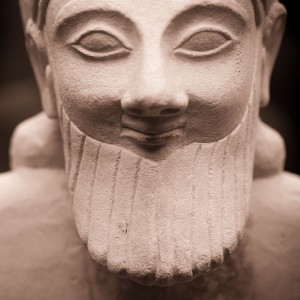
Welcome to The History of Cyprus Podcast -- a monthly series exploring the island’s past from 10,000 BCE to the 20th century. Each episode features in-depth conversations with leading scholars in archaeology, linguistics, political and social history, bringing academic insight to a wide audience. Together, we uncover the languages, cultures, conflicts, and legacies that shaped one of the Mediterranean’s most storied crossroads. Whether you’re a student, a history enthusiast, or just curious about Cyprus, this podcast offers something for everyone -- rooted in research, driven by storytelling. If you’d like to reach me, my name is Andreas. Please feel free to send me an email at cyprusthepodcast@gmail.com --------------------------------------------------------------- Follow The History of Cyprus Podcast Instagram and support the show on Patreon: https://www.patreon.com/TheHistoryofCyprusPodcast https://instagram.com/thehistoryofcyprus *The podcast image, ”Dressed for the Gods” (250BC) is from the British Museum taken by William Warby. Check out more of his work at flickr.com/photos/wwarby/











Episodes
Feb 2, 2023
Feb 2, 2023
1hr 6 min
Luca Zavagno's (Bilkent University) work, "Cyprus Between Late Antiquity and the Early Middle Ages" frames the bulk of this month's episode. Traditional narratives suggest that the late Roman Period (i.e., Byzantium) for Cyprus was a period of physical dislocation, social disruption and economic turmoil precipitated by the infamous 7th century Arab Raids. But Zavagno, using archaeological evidence and material culture, redresses the impact of the Arab Raids on Cyprus and explores how Cypriots navigated between Constantinople and the Caliphate showing this to be a period of both continuities and change.
Jan 15, 2023
Jan 15, 2023
2 min
Aḥmad ibn Yaḥyā ibn Jābir al-Balādhurī was a 9th century Arab (or possibly Persian) historian whose work, "Futūh al-Buldān" (Conquest of Lands) provides us a valuable non-Roman/Byzantine perspective on the Arab invasions of Cyprus. You'll hear al-Baladhuri reference Cyprus' infamous "condominium" where the island's tax revenues were split between the Caliphate and Constantinople until Cyprus was reintegrated into the Eastern Roman Empire (Byzantine) in the 10th century. Next month, I invite Professor Luca Zavagno from Bilkent University to discuss Cyprus in late antiquity.
Jan 2, 2023
Jan 2, 2023
1hr 25 min
For this month's episode I welcome Dr. Ersin Hussein (Swansea University in Wales) to discuss Cyprus' political and social history as a Roman province. Ironically, although Romans were sticklers for record-keeping, the textual evidence on Cyprus is surprisingly scarce. Using epigraphic (e.g., monuments, inscriptions), coins and textual evidence, Ersin pieces together a better understanding of Cypriot identity in Roman Cyprus and sets out to recover those marginalized voices in antiquity. Instead of "disappearing" in the Roman Empire, Ersin discusses how Cypriots maintained a surprising level of agency and identity (even forming the famous "Koinon Kyprion" in this period) and leveraging their collectivity to exert influence in Rome.
Dec 15, 2022
Dec 15, 2022
1 min
Ammianus Marcellinus was a Roman soldier and an historian from the late Roman Period whose historical works, Res Gestae, provides us a brief glimpse into Rome's policy towards Cyprus. He describes Roman policy as "voracious" and implies opportunism as Rome sought to replenish its depleted coffers by seizing Cyprus and draining it of its treasury. Of course, the situation is significantly more complex. That's why next month, Ersin Hussein, from Swansea University, joins us to describe Cyprus in the Roman Period!
Dec 2, 2022
Dec 2, 2022
59 min
Held in secret in 1878, the Cyprus Convention negotiated the administrative handover of Cyprus from the Ottoman Empire to the British. It was certainly an opportunity to strengthen British presence in the Eastern Mediterranean. Lulled by romanticized images of what Cyprus was thought to be, they found a very different reality. Some, in fact, would call its first years on the island an unmitigated disaster. Troops were ill-prepared for the island's oppressive heat, swarms of mosquitoes that infested swamps and deadly bouts of malaria. Roads were virtually non-existent and there was hardly a functional port. How were the British received? And how did they cope with the island's challenges? This month's episode, we're joined by Professor Andrekos Varnava from Flinders University who sheds some light onto Cyprus in the late 19th and early 20th centuries.
Nov 15, 2022
Nov 15, 2022
3 min
In 1878, Cyprus Archbishop Sophronios III delivered a speech celebrating Cyprus' new status as a protectorate of Great Britain. The speech would've been delivered to Sir Garnet Wolseley, the island's first appointed High Commissioner, in French, and presumably in front of a large crowd. Sophronios held high hopes for Cyprus' future as a British Protectorate. He espoused British ideals of equality and justice for the benefit of both Christian and Muslim. Why did the British want Cyprus? What did they find? And how did they acclimate? Next month, Professor Andrekos Varnava, from Flinders University in Australia, discusses Cyprus and the British Empire with the History of Cyprus Podcast.
Nov 2, 2022
Nov 2, 2022
1hr 26 min
Cyprus' history has, in many respects, been skewed. Historically speaking, its been beholden to more predominant narratives -- a passive recipient of culture. Yet this thinking is wrong. And we still deal with the reverberations from some of these archaeological fallacies in mainstream literature. Pick up a travel brochure. You'll certainly read that Cyprus was "colonized" by Mycnenaeans -- suggesting that it lay fallow, bereft of culture, until that pivotal moment in history. If not explicit, it is certainly implied. Or that its art has distinct "Assyrian" and Near Eastern influences -- rather than its own unique and innovative styles. Or that it, like the rest of the Near East, ignominiously collapsed during the Crisis Years rather than what it did: continued to thrive and persevere, maintaining complex trade networks, architecture and literacy. Maria Iacovou, from the University of Cyprus, problematizes these all too common narratives and explores the origins of these erroneous assumptions. She challenges us to rethink how we discuss archaeology and invites us to consider Cypriot history with a new lens. Please join me as I discuss Cyprocentricity with Maria Iacovou.
Oct 15, 2022
Oct 15, 2022
2 min
The Sargon Stele 722–705 BCE , also known as the Kition Stele, is the only of its kind discovered in Cyprus, written entirely Akkadian using the cuneiform script. It was erected by King Sargon II of the Neo-Assyrian Empire near Kition (modern Larnaca) and describes his conquests and the voluntary submission of the Seven Kings of the Land of Ia (which has been identified as Cyprus) and Iatnana meaning the Islands of the Danaans, i.e., Greece. Likely this act of submission provided the Cypriot kings a trade network and a source of stable markets for the exportation of copper and other trade goods. The stele, found in modern day Larnaca, references its deposition near "Mount Ba'al-harri" (quite possibly Stavrovouni). You'll hear Professor Maria Iacovou reference King Sargon II in my next interview where she discusses the history of archaeology on Cyprus and the importance of the new concept of "Cypro-centricity!" Look out for that on November 2nd!
Oct 2, 2022
Oct 2, 2022
55 min
This month, we travel back to the 12th century BCE with Professor Louise Hitchcock (University of Melbourne) where we discuss Cyprus' role in the Bronze Age. Rather than being a passive island, swept up in a sea of empires, Cyprus (Alashiya) was an integral piece in a well-oiled Bronze Age machine. With its vast reserves of copper, Cyprus more than held its own in this period as the Amarna Letters can attest. In fact, its unique decentralized political system had allowed it to weather the infamous Bronze Age collapse. Its systems survived, and in some cases thrived, while other Bronze Age empires crumbled. And while literacy was snuffed out in Mycenaean Greece, Cyprus' own writing systems persisted. Join me for Cyprus in the Bronze Age!
Sep 15, 2022
Sep 15, 2022
3 min
This month's primary source dates to circa 1350BCE. It is a Letter from the King of Alashiya (i.e., Cyprus) to the Pharaoh of Egypt. This particular letter, EA 35, has been dubbed, "The Hand of Nergal." The Amarna Letters are a series of correspondences between the Great Powers in the Bronze Age written in Akkadian using the cuneiform script (the diplomatic language of the Bronze Age). In this abridged reading, you'll hear the King of Alashiya call the Pharaoh "brother" a number of times. This "honorific" reflects their equal footing as sovereigns and hints at Cyprus' strength as a regional power. Chillingly, however, you'll hear him refer to the "Hand of Nergal" -- the plague god that has decimated the island and impacted his ability to export copper. Next month's episode, we'll learn about the Amarna Letters, Alashiya and more. Join us we explore the Bronze Age with Louise Hitchcock!